
Sunday Stack
Everything I Read in Summer and Recommend.

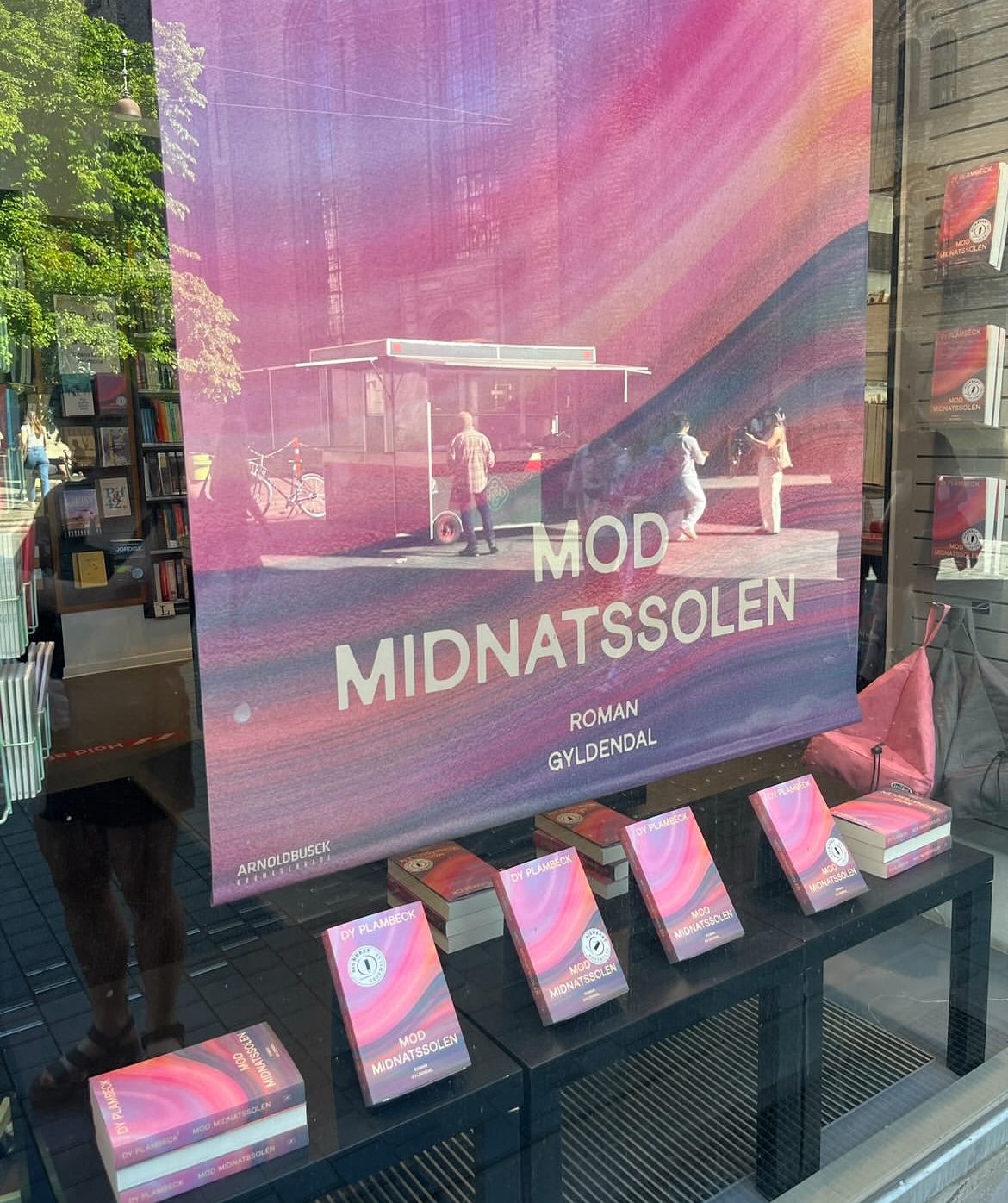
I very rarely do longer reviews anymore, not for lack of interest but more lack of time and the patience to sit down and process. I have an Instagram account for quick yay or nay’s and the odd long review, but today we’re going to run through the highs of summer.
*This is not everything I read this summer, just the stuff I heartedly recommend.
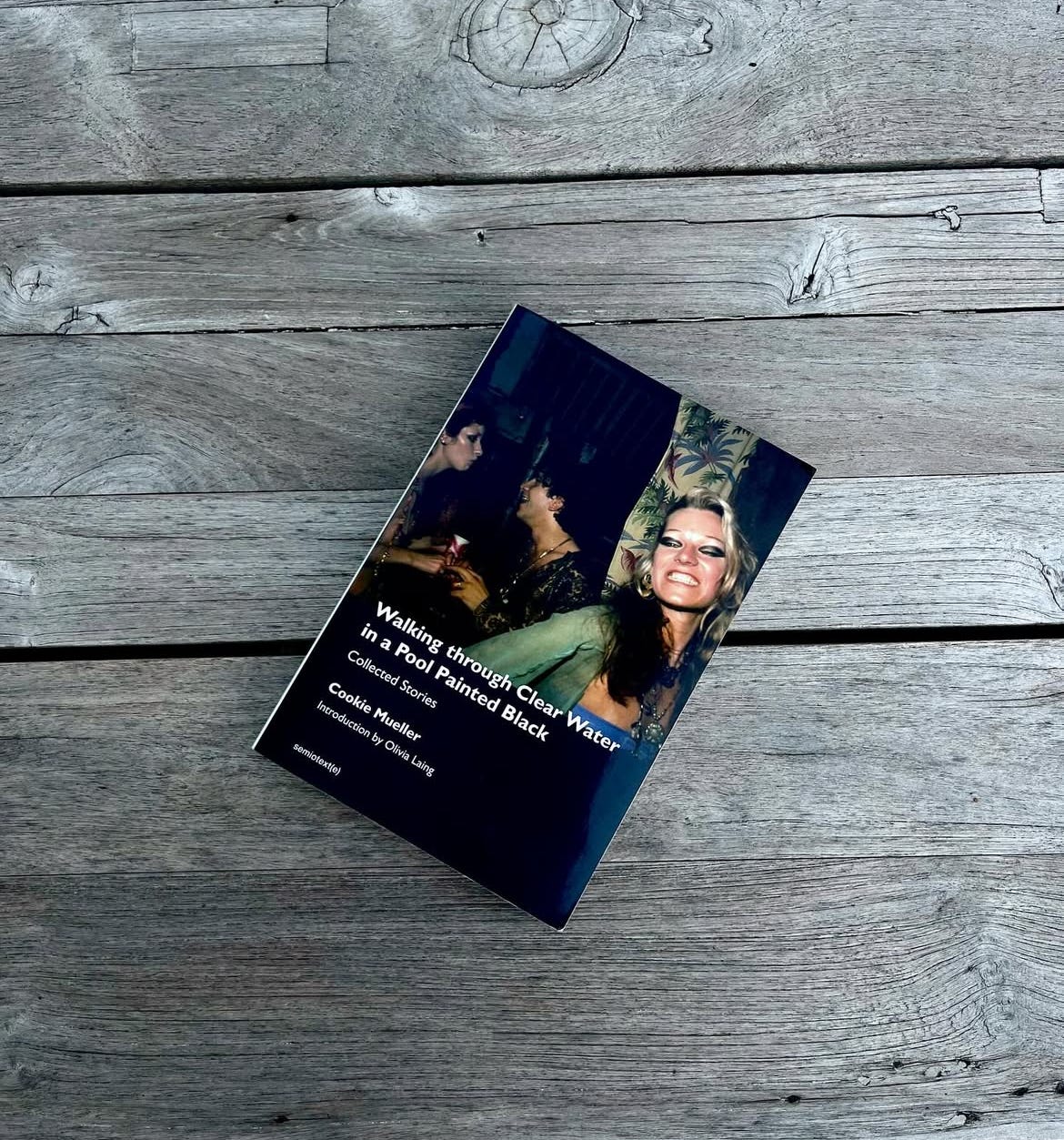
Walking Through Clear Water in a Pool Painted Black — Cookie Mueller
I had never heard of Cookie Mueller before picking up this book and in many ways that worked for me. Her life is so wild that it takes no prior knowledge of the author to find yourself drowning in said painted black pool. What delighted me most about this curated selection of writings, agony aunt columns, musings, and journalism is Mueller’s matter-of-fact voice shining through as she tells you about anything from childbirth, almost doing porn, smoking with the Manson girls on a bus in San Francisco, or falling in love. She’s incredibly observant — it’s like throwing an anthropologist in the party scene and letting them do a line “for research.” It’s a hefty book but it’s one I highly recommend if you liked Julia Fox’s Down the Drain or John Waters films (Mueller was one of his muses.)
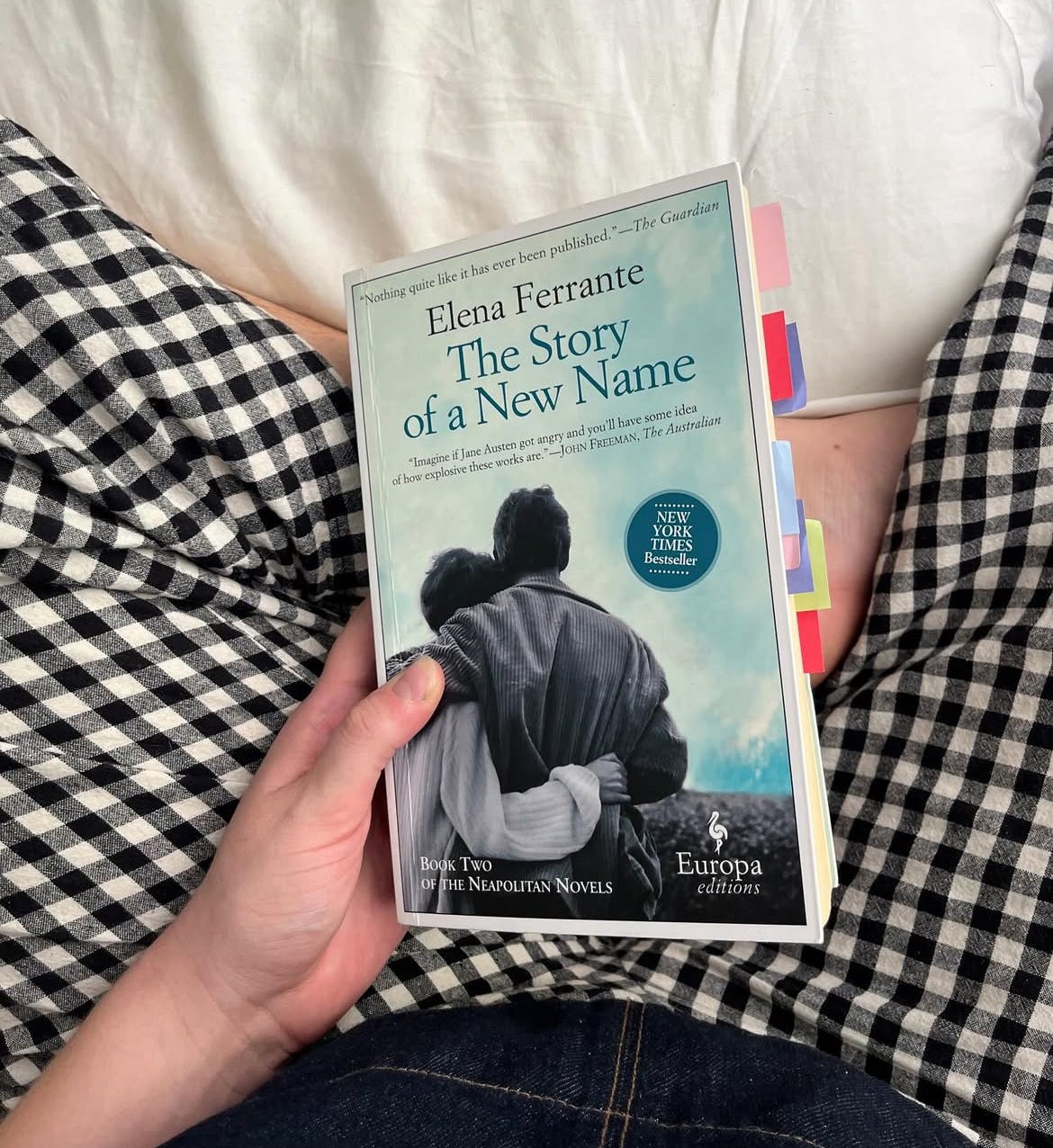
The Story of a New Name — Elena Ferrante
There is a person who responds to me every time I share that I am reading Ferrante to tell me how much they hate Ferrante’s work and that they have donated the Neapolitan Quartet to a local Goodwill. If this is you — you can skip this one. But I get where they are coming from. I too, was slightly disenchanted both times I read My Brilliant Friend. It was so boring! The atmosphere was interesting, learning about the region of Italy was interesting, but the characters and the plot left me wanting much more. Enter: The Story of a New Name. It’s 500 pages long and I found myself splitting the literary G — when I looked up I was 200 pages deep wondering why I couldn’t put it down. Like the remainder of a Guinness, it went down smooth and quickly. Someone else let me know that the quarter was originally one giant novel that was then split into what we see on shelves today. Oh so THAT makes sense! Novel one is the shot, novel two is the chaser. And if the books keep getting better I am going to find myself with a very hard hangover. (They’re getting worse as I creep up upon thirty.) Elena and Lila are more grown up now and while their dynamic often retains its familiar mercurial shape, it starts to diverge as they follow their different paths in life. I felt this was the novel where Elena’s voice really took shape for me.
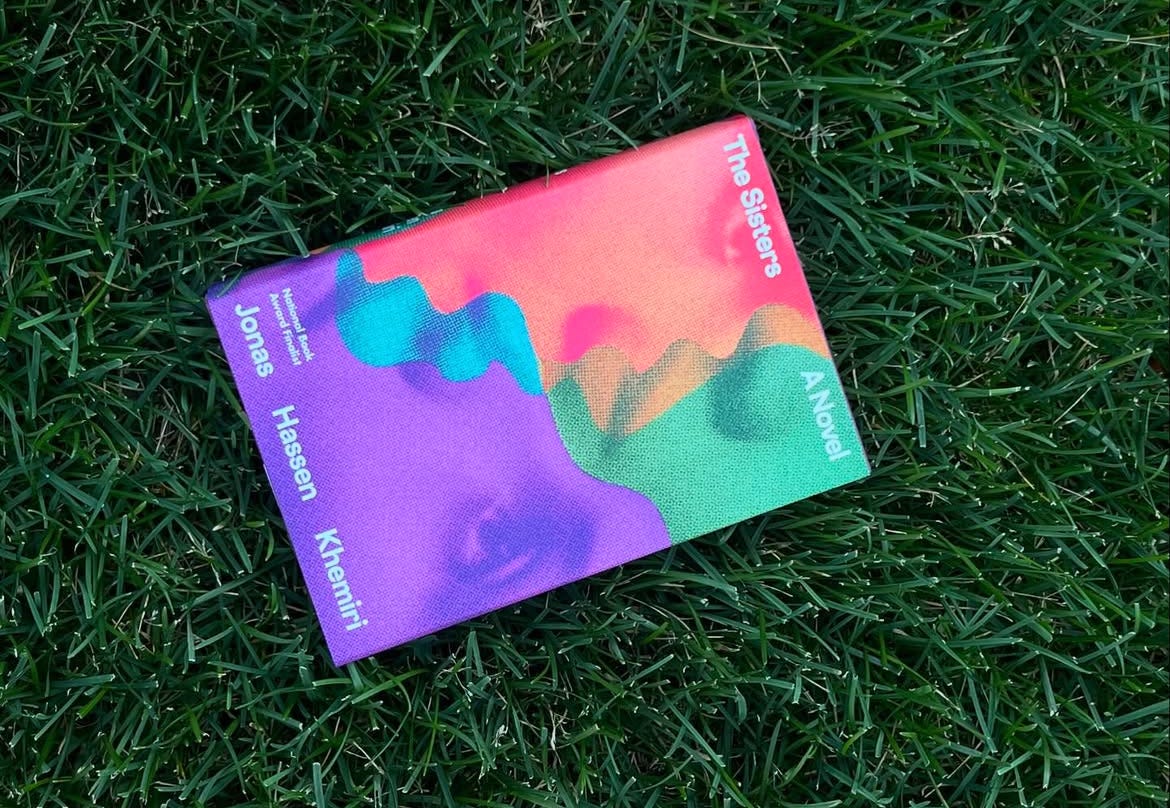
The Sisters — Jonas Hassen Khemiri
I am rather annoyed to be recommending to you a large tome written by a man but I would be stupid and remiss not to include The Sisters on all my lists. (Note — I promise I’ll include a book shorter than 400 pages in a second.) This book scratched the itch that Blue Sisters and Little Women bit. I see them as my new unofficial and unsanctioned sisters trilogy. Khemiri weaves together Tunisian (you may want to annunciate this at the bookstore lest you find yourself reading about “Nice comma France”) and Swedish cultures and atmospheres to present a quilt of sisterhood and family trauma that is so satisfying. The best way I can describe the writing is addictive. The Mikkola sisters are so likable and complicated, but with a sisterly way of acting and speaking to each other that makes me wonder if Khemiri has sisters himself. (I might Google this, I might not.) We follow them over the course of three decades (2000 - 2035), following meet-cutes, job loss, discovery of self and passions, divorces, and a curse. Yeah, you read that right. A freakin’ curse. Woven throughout the body of the text is a second, almost B-roll story of a boy who recounts his own familial struggles and the way the Mikkolas have affected him and his world. It has a real Virgin Suicides thing about it. I highly recommend. And so does the National Book Foundation now.
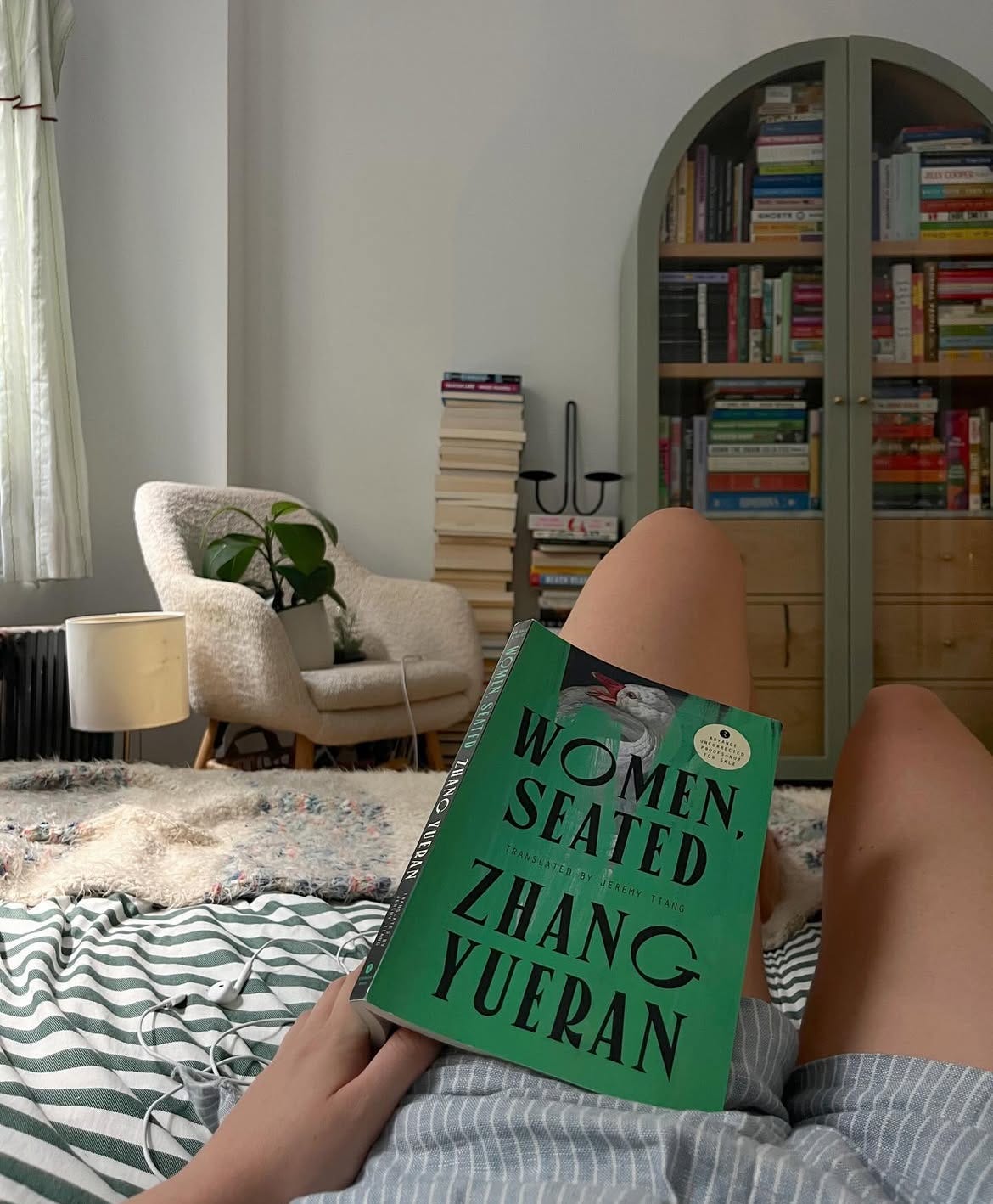
Women, Seated — Zhang Yueran
I won’t spend too much time here again because I unpacked a bit of this slim (finally! Less than 400!) novel in my Women in Translation Month post. But I’d like to reemphasize the oddness of this beautiful little novel that flips the domestic drama on its head. Three women, one scandal, all of them affected by it but not its perpetrators. A little boy. A home in China. More buzzwords here. It starts with an attempted kidnapping and somehow along the way becomes way more than just the scandal that sparks the entire novel. It never followed the path I thought it might, and there is one scene with the “swan” that will haunt me. It’s a strong, strong image — sorry to Peta. This is quite lazy of me in terms of review but it’s not for lack of interest. More so that I really urge you to pick this one up and then come talk to me afterword. I think it’s best to go in blind with little expectation and let this novel quietly move you across the room.
Grape Juice — Eliza Dumais
I am an 831 Stories fan, that is no secret. I have read every one of their delicious and gorgeously marketed novels and enjoyed them all. But there is something about Grape Juice that has left its taste on my tongue long, long after I finished the book. Dumais has managed to write a contemporary/lit-fic romance that I think both the most devout worshippers of the genre and those with more atheistic tendencies will love in equal measure. Alice and Henri have chemistry through the roof, the cast of characters is straight out of a Richard Curtis film (the 90s ones, obviously), and the setting couldn’t be more romantic. A vineyard in France? Come on. This is a really beautiful lesson in storytelling within limited space and how you can really develop an entire world if you trust your vision, are razor-sharp with your words. and allow your characters to lead and take centerstage. For a romance it is quite character over plot, but in the same way that Before Sunrise and Before Sunset are. I buried the lede slightly here in not telling you that this isn’t out until November, but I really wanted to sell you on it so you’d pre-order it and we can talk about it 2-3 hours after you get it.
But before that! Exit Lane (which I read in Spring, sue me) comes out next week and as a tall woman of Danish heritage with a near-photographic-memory for the film When Harry Met Sally, it was a perfect read.
Beach Read — Emily Henry
This is a re-read before anyone yells at me. It also is probably feeling a bit off-brand for anyone who thinks they know my reading taste. To be fair, I present a bit pretentious in terms of what I gravitate toward. But in all honesty, it’s just because I rarely find a romance that is hitting exactly what I want. Which is a massive bummer for me because if I had it my way? I’d read about 60-70% more romance. Beach Read is a masterclass in the genre. (If you are a diehard for the romance books please don’t yell at me if you think I am wrong — I am sensitive and your efforts could be used to yell at someone better like your local representative if you’re in the US.) Henry allows her characters to be deep and flawed and a little silly, but at the end of the day they feel incredibly real. The romance isn’t forced — it’s a slow but inevitable burn. And *spoilers* when they do get together, there is a good period of time where we see them truly together and navigating this new dynamic. There isn’t a big blow up or miscommunication trope. Thank. God. I also love the fact that a lot of the story speaks to their mutual interest: writing. It has a brilliant premise and is near trope-less outside the enemies-to-lovers of it all. BUT that said? They weren’t even real enemies at first. That’s always a pet peeve of mine — how am I supposed to fall in love with someone who I hate/hates me? Weird vibes.
The Trees — Percival Everett
I watched an interview with Dua Lipa and Percival Everett for Service95 where Everett reminds the reader that you have to lead with humor when approaching a dark topic so that you can get the audience on your side. This book is genius for that. It’s a hard topic — lynching in the United States. And it’s even harder when you realize this is a contemporary novel that doesn’t shy away from the fact that we are still lynching men and women today. But it is a supremely funny novel as well. Something you’d be familiar with if you read James (also by Everett) in the last year or so. The Trees is in part social criticism and part classic detective novel. I don’t want to give too much away, but the mystery at the center of the story was one I couldn’t have predicted the ending to, and have often can we say that? Everett’s ability to determine the pace and the speed at which you read the book is masterful. You will flip pages like the wind until suddenly you reach a chapter where you need to come up for air. When you get to the one with Damon and the writing of names? Text me. It’s a really stunning and approachable read. I am really excited to keep reading more of Everett’s work.
The Compound — Aisling Rawle
You’ve seen the 100 reviews calling this a Love Island x Hunger Games collab. And it’s true. That’s pretty much exactly what it is. It has stuck with me mainly because I read it upon finishing this season of Love Island and had to reckon with how much I invested in strangers I watched every day for, essentially, sport. There’s probably a profound message buried under the piles of things the winners earn throughout the challenges, but I honestly just recommend it because it’s “fun” and I think a lighter-ish read that could break up some of the other ones I listed. Because you’re obviously going to read all of these, right?
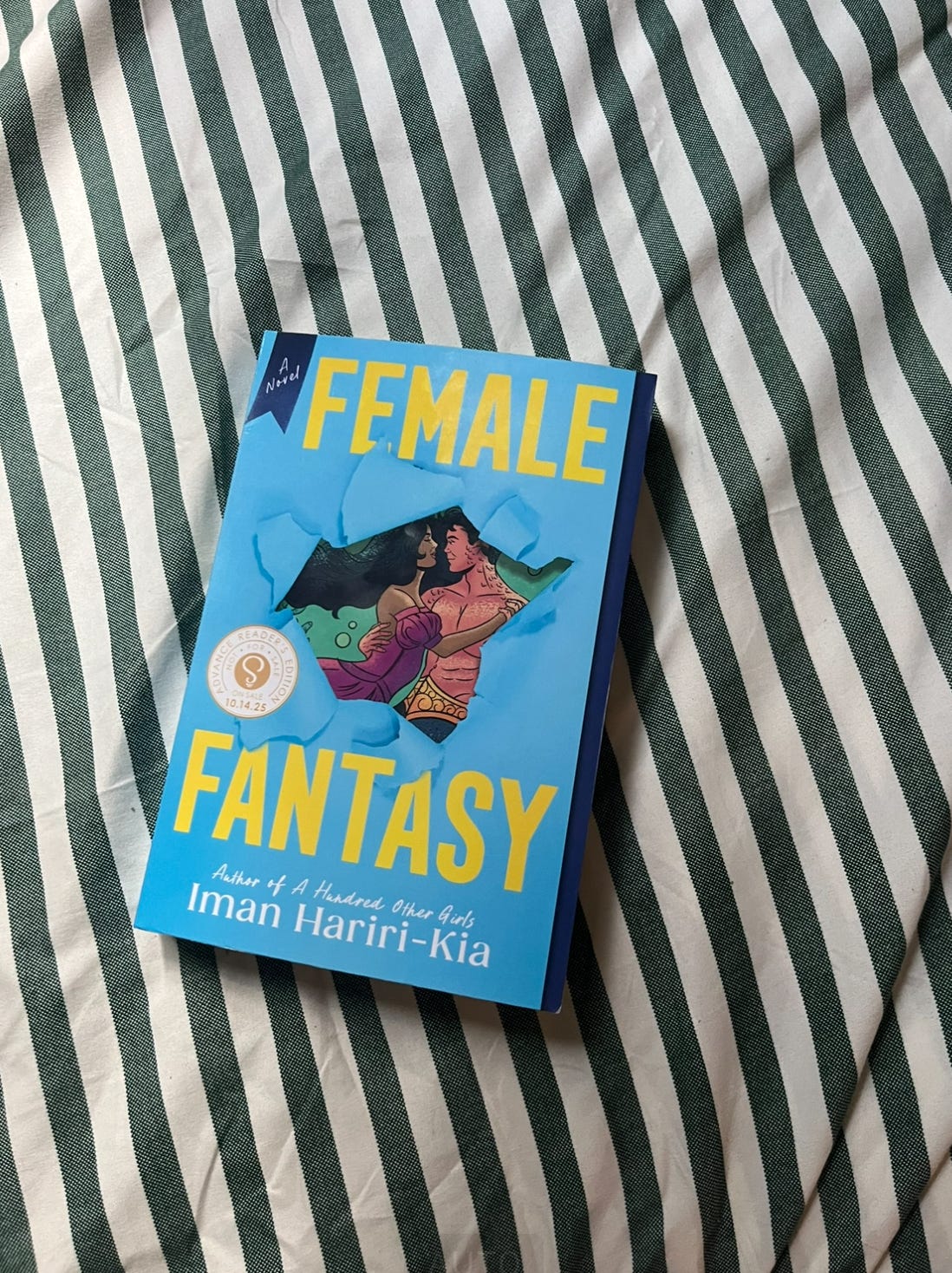
Female Fantasy — Iman Hariri-Kia
Hariri-Kia loves and respects romance and it shows. (And you can read the roundtable with her on Lit Girl if you don’t believe me). The book is really two-in-one. Odd chapters are an epic mermaid romantasy series while even chapters follow Joonie, a young woman living in Connecticut who dreams of a romance like the one of her beloved — you guessed it — mermaid series. It’s quite meta in a way that completely works. But what charmed me about this novel so much is it’s understanding of genre and the deeper meanings behind why many love it. In many ways it feels like what Percival Everett was saying. Hariri-Kia is able to show readers the power and agency that romance novels can give women and marginalized groups. Underneath sweet cartoon covers are actually acts of political protest. Okay, maybe that’s a tad dramatic. But I do think the idea of pleasure is so charged in today’s climate (especially when it is in regard to women/LGBTQIA+ community). If you’re worried this is a really intense and polarizing book now because of that kind of crazy review, rest assured it is not. It is a sexy and fun read that almost had me seeking out pirate romances. I definitely didn’t do any cursory Googling…
This House of Grief — Helen Garner
Another Dua pick — let this be an endorsement for her taste. Garner makes an interesting case for needing to look at criminals or people who do awful things that feel outside the realm of humanity as, well, humans. In 2005, Robert Farquharson’s car was found at the bottom of a body of water off the highway in Australia — his three young sons drowned with the vehicle. He claims to have blacked out from a coughing fit, lost control of the vehicle, and managed to get himself out upon impact and go find someone to get the boys. Whether or not he killed his children intentionally is the crux of the book and of the trial. Garner attended the trial and This House of Grief is her account of both the trial, the people involved, and the aftermath. It’s a hard read because ultimately, I do think Farquharson did act with intention, but it also is really necessary to unpack and reflect upon as readers. We live in a really sensationalized world and we follow trials like reality TV, we should have an understanding of our relationship to why. I think this is a great entry point into that conversation.
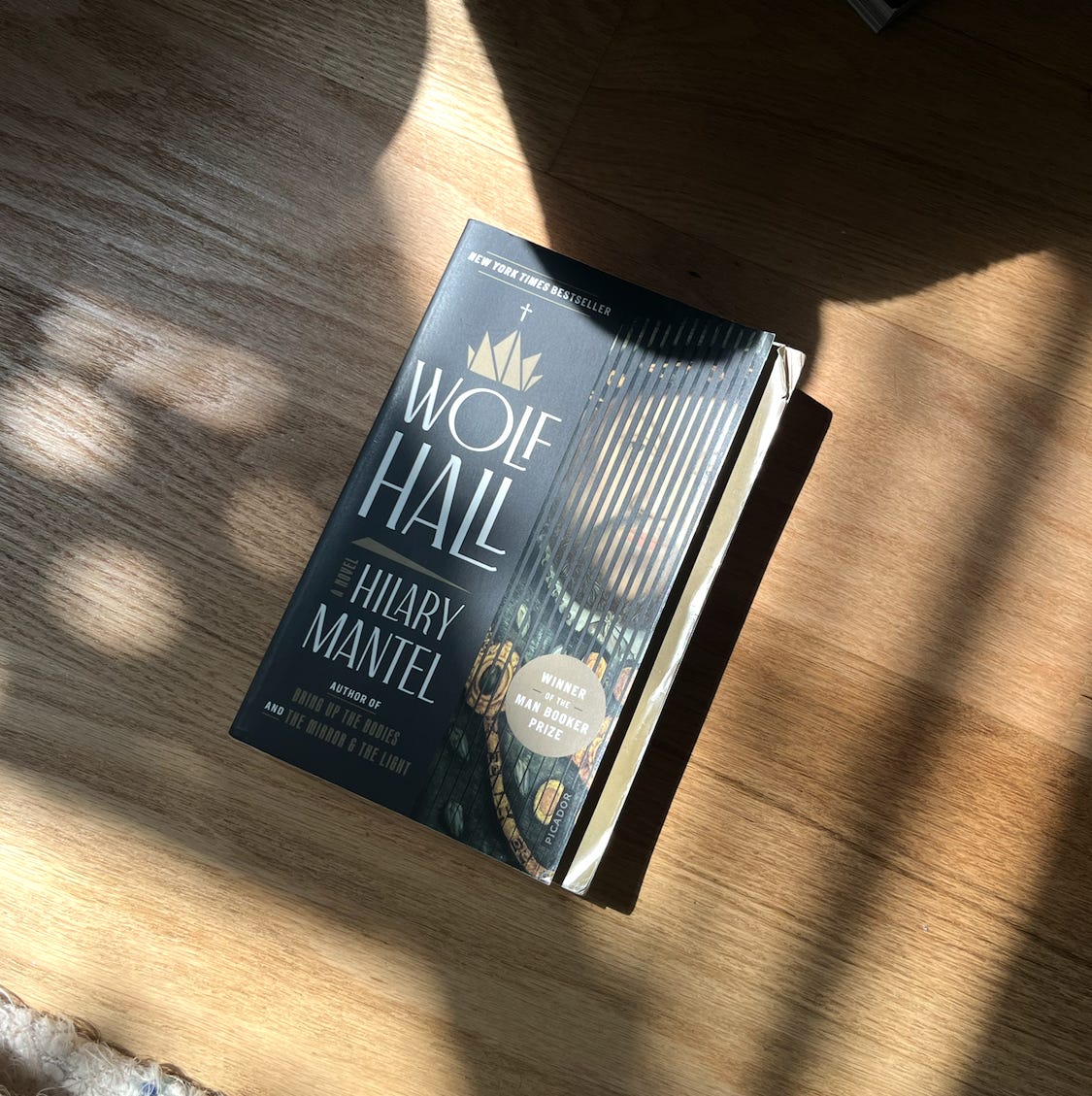
Wolf Hall — Hilary Mantel
I am kind of giggling that I am recommending an older and critically acclaimed fictional recounting of the life of Thomas Cromwell but here I am. As a proclaimed non-historical fiction girl, I was changed. This book is kind of like Hamnet in the sense that you don’t need a ton of historical context and you get thrown in and swept away by a tide of really just gorgeous writing and modern observation/humor. It’s a trilogy and I look forward to reading more. It’s so random I picked this for summer?
Sad Tiger — Neige Sinno
I have sent over 15 minutes worth of voice memos to Martha who put this beautiful (I am loath to use this word and you’ll see why) and compelling memoir on my radar. Sinno unabashedly recounts — and often to quite disturbing detail so TW — her experience with childhood sexual assault at the hands of her stepfather. Sinno was six, he was around twenty-four years old. The abuse went on for years and left an emotional mark on Sinno that she may very well spend the rest of her life examining. And that’s really the big takeaway from the book for me. So often in media or what I have consumed there is a really hopeful ending for many survivors. I think of Chanel Miller and Know My Name and how while there is a great deal of trauma I am sure she still unpacks, there is also a lot of joy in the life she has gone on to build. And I don’t mean to insinuate that Sinno hasn’t been able to experience joy in the years following the assault and the eventual trial (Sinno’s abuser would received nine years in prison of which he served five — he was one of the rare cases of admitting guilt). But it is clear that she will never be unmoored from the grief and confusion that the assault caused.
It’s an unbearably hard read that took me a while to get through because of the sadness I felt for Sinno. It is also — as Martha wisely pointed out — a great novel of craft. Sinno weaves throughout poets and writers and studies conducted across many fields that all tie back to her processing emotion and writing. The title of the memoir comes from a William Blake poem, The Tyger. She also brings up Virginia Woolf and the abuse she suffered at the hands of her older step-brothers, and Nabokov’s Lolita. Lolita is a novel often misinterpreted, and I admit to not knowing the protagonist was only twelve as she is always depicted in pop-culture or on book covers as much older. These pieces of media and the way they have shaped Sinno’s understanding are so beautiful woven throughout this non-linear piece of writing in a way that is so effective.
Sinno mentions all the reasons she should or shouldn’t write the book and they are complicated. But it makes me wonder how we decide whose story is worth telling? Who gets to be the voice of the movement or the understanding? Miller was so prominent and got a deal with a Big Five publisher because of the media coverage of her assault and trial (and also because she is a beyond phenomenal writer as well — the book is really quite incredible.) But would those larger publishers take a chance on a smaller memoir like Sad Tiger? Not sure I know the answer, but I am so glad this book exists.
That is my long winded wrap up. Some honorable mentions: Jane Eyre, Frankenstein, The Other Wife, Trip, Strega, and The Möbius Book.
The Cookie Mueller book is SO good! One of my faves. And I'm reading "The Trees" right now. Intense! (And oddly funny?) I'm enjoying it. Great list!
before you said it, i was thinking beach read feels out of place LOL but it really does go hard